Everything You Need to Know About Cooperstown Trading Pins
A trip to Cooperstown is about much more than the games themselves for many young baseball players.
The chance to compete against teams from across the country is exciting, but ask former participants what they remember most, and you’ll often hear another answer: trading pins.
Long before the first pitch is thrown, players are discussing designs, comparing collections, and planning trades. By the time teams arrive in Cooperstown, pin trading has become an event of its own.
This simple tradition has now grown into one of the most recognizable parts of the Cooperstown experience.
So if you’re preparing for your first tournament or simply wondering what all the excitement is about, here’s everything you need to know about Cooperstown trading pins.
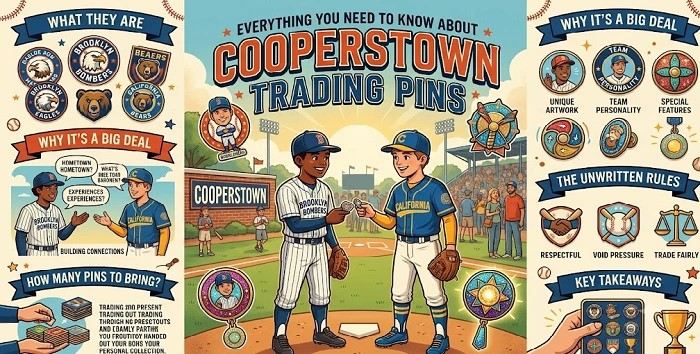
What Are Cooperstown Trading Pins?
Cooperstown trading pins are custom-designed pins created by teams attending tournaments in Cooperstown, New York.
Each team typically develops its own unique design featuring elements such as:
- Team name
- Logo
- Mascot
- Team colours
- Player numbers
- State or hometown references
The pins are produced before the tournament and brought along specifically for trading.
Players exchange them with athletes from other teams, creating collections that represent their tournament journey.
By the end of the week, many players have accumulated dozens of different trading pins from teams they may never have encountered otherwise.
Why Is Pin Trading Such a Big Deal?
Trading small metal pins may seem like a minor activity at first glance, but in reality, it becomes a major part of the Cooperstown atmosphere.
One reason is that it creates interaction between teams.
Players who might never speak during competition often connect through pin trading.
A simple trade can lead to conversations about:
- Where teams travelled from
- Tournament experiences
- Favorite baseball memories
- Future games
The tradition helps turn a national tournament into a shared experience rather than a collection of individual competitions.
Many players return home with friendships and memories that began through a simple pin exchange.
When Did Cooperstown Pin Trading Become Popular?
Pin trading has existed in sports for decades, but its popularity exploded as youth baseball tournaments expanded.
As more teams travelled from different parts of the United States, organizations began creating custom pins to represent their identities.
Over time, the pins became increasingly creative.
Instead of basic designs, teams started producing collectible pins with unique features and eye-catching details.
Today, some families begin discussing pin designs months before the tournament starts!
What Makes a Great Trading Pin?
Not all trading pins attract the same level of attention during the game.
Some designs become highly sought after during tournaments.
Several factors often contribute to a pin’s popularity.
- Unique Artwork
Players are naturally attracted to Cooperstown trading pins that stand out.
Creative mascots and distinctive shapes often generate more interest than standard designs.
- Team Personality
Many successful pins reflect the character of the team. Using a design that captures local culture or regional pride often creates stronger connections during trades.
- Special Features
Modern trading pins can include features such as:
- Glitter accents
- Spinner elements
- Sliders
- Danglers
- Bobble components
- Glow effects
These additions make pins more interactive and collectible.
- Limited Availability
Pins produced in smaller quantities often become more desirable because they are harder to obtain.
This scarcity naturally increases interest among collectors.
How Many Pins Should Players Bring?
This is one of the most common questions parents ask before attending Cooperstown.
The exact number varies depending on team preferences and tournament schedules.
Many teams order enough Cooperstown trading pins to allow players to:
- Trade throughout the event
- Exchange pins with every team they meet
- Keep a personal collection
- Save extras as souvenirs
Running out of pins early can be disappointing, particularly for players who enjoy collecting throughout the tournament. This is why ordering more pins is a safer option.
The Unwritten Rules of Pin Trading
One reason pin trading remains enjoyable is that players generally follow a few simple principles.
- Be Respectful
Respectful communication helps maintain the positive atmosphere that makes pin trading special.
- Avoid Pressure
Not every player wants to trade every pin. Some also choose to keep certain designs, and that decision should always be respected.
- Trade Fairly
Pins can have different values, but most players aim for trades that feel fair and mutually beneficial. The goal is fun rather than competition.
- Enjoy the Experience
The best collectors often focus less on value and more on the memories attached to each pin.
Years later, stories behind the trades usually matter more than the trades themselves.
Why Parents Appreciate the Tradition?
Parents often arrive expecting the baseball games to be the primary focus.
While the games are certainly important, many quickly discover that pin trading adds another layer to the experience.
The activity encourages:
- Social interaction
- Confidence-building
- Communication skills
It also gives players something exciting to do between games.
Instead of sitting around waiting for the next matchup, many athletes spend their free time exploring trades and meeting other participants.
How Teams Use Pins to Build Identity?
Custom trading pins have become an important part of team culture and are known treated as an extension of brands.
The design process often involves coaches, parents, players, and team administrators, and the finished product becomes a symbol of the team’s season and accomplishments.
One more reason Cooperstown trading pins remain popular is their lasting value.
A pin serves as a reminder of
- A tournament attended
- A team encountered
- A friendship formed
- A memorable season
The collection becomes a visual record of a player’s youth baseball journey in multiple ways.
FAQS
- Why do teams create custom Cooperstown trading pins?
Teams create custom pins to represent their identity, make new friends, build team spirits, and participate in one of Cooperstown’s most popular traditions.
- What features make a trading pin more desirable?
Features such as unique artwork, special effects, creative shapes, and limited-edition designs often create the most interest among collectors.
- Do all players participate in pin trading?
No! Most players enjoy trading, but participation is totally optional. Some athletes actively collect pins, while others simply keep a few favorites as souvenirs.
Key Takeaways
Cooperstown trading pins have become far more than a tournament accessory. They represent memories, friendships, team pride, and the excitement of participating in one of youth baseball’s most celebrated experiences.
Many players leave with another trophy: a set of pins that tells the story of their tournament journey. Years later, those small pieces of metal often bring back memories and moments that made Cooperstown unforgettable.

I serve as a content writer for Fan Trading Pins, producing SEO-friendly blog posts on pin trading guides, top collectible trends, and fan events. With a knack for research and storytelling, I help fans make informed collecting choices.